
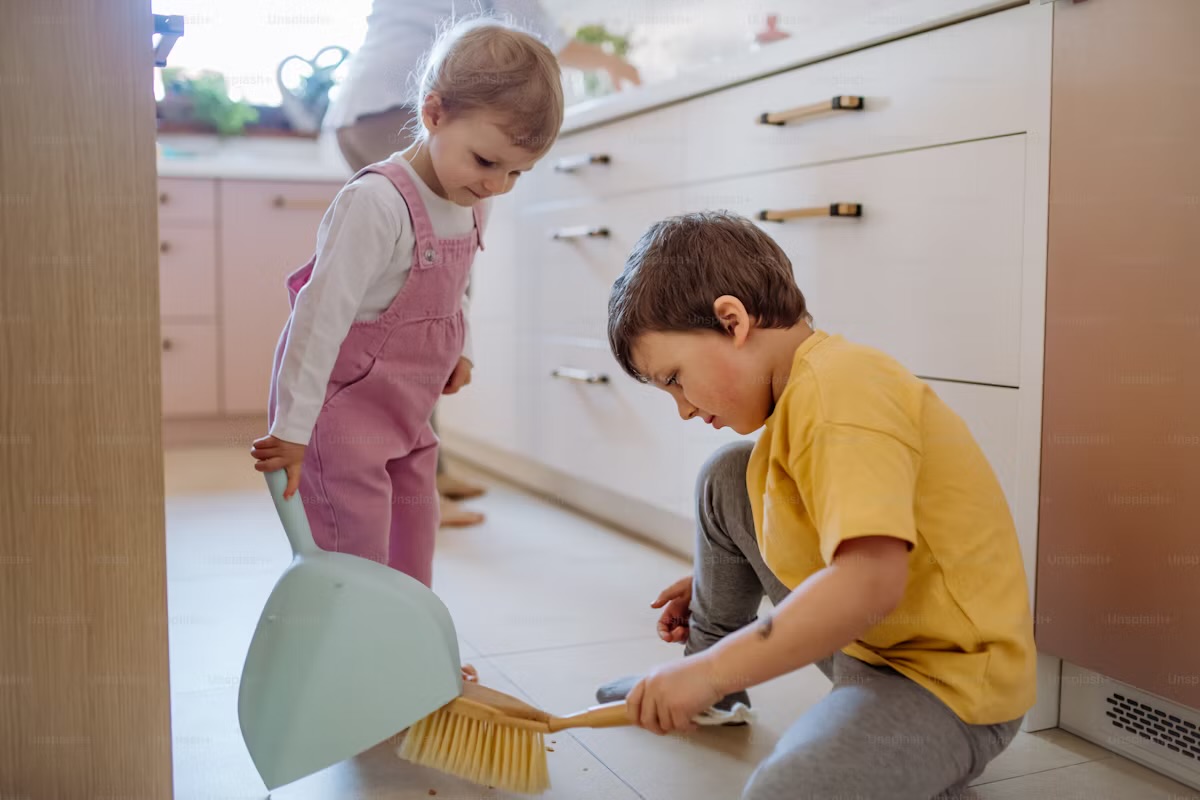

Talking to kids about money is not always the easiest thing to do, especially when we live in a world where cash is often digital, credit cards take the spotlight, and younger generations rarely see the physical exchange of bills and coins. Yet, learning about money is one of the most important life skills children can acquire early on. If kids grow up without a clear understanding of how money works, it can affect their financial confidence well into adulthood. That’s where chores come in as a natural and effective teaching tool.
The idea of using chores to teach kids about money might seem simple, but the impact is huge. Kids already know that chores are part of daily family life — cleaning their room, setting the dinner table, feeding the pets, or helping out with laundry. When we connect those tasks to money, we show them the relationship between work, responsibility, and earning. Instead of just telling children to be careful with money, we give them real-world practice in earning, saving, and spending, all from the comfort of home.
Sometimes we feel uncertain about how to start these conversations. They might worry about giving kids money too soon, or that tying chores to payments could backfire. The good news is that teaching kids about money using chores is less about paying for every little task, and more about creating consistent opportunities for them to see how effort leads to reward. This approach also helps children learn delayed gratification, budgeting, and even goal setting — lessons that will guide them for years to come.
Think of it this way: when kids earn a few dollars for a job well done, they’re not just earning money, they’re building confidence. They’re gaining independence, learning the value of effort, and beginning to form habits that will eventually shape how they manage money as adults.
.
How to Teach Kids About Money Using Chores
Let’s break down practical, age-appropriate ways parents can teach kids about money using chores, starting with the basics.
.
Start with Simple, Age-Appropriate Chores
The first step in teaching kids about money using chores is to start small. A five-year-old does not need to mow the lawn or do laundry, but they can certainly put toys back in their bin, help set the dinner table, or place dirty clothes in a hamper. These tiny tasks might seem insignificant to adults, but to children, they are meaningful because they are achievable and measurable. When parents attach a small reward to these chores, it helps children connect the dots between their effort and a tangible outcome.
For example, imagine a young child who gets a dollar each time they help sort laundry by colors. At first, the money may not mean much, but over time, as they collect coins or bills in a piggy bank, they begin to realize that their consistent effort leads to growth. This is how responsibility and money awareness take root.
To keep this process effective, parents should focus on repetition and consistency. When the chores are too complicated or inconsistent, kids may feel frustrated and lose interest. Simple chores allow children to succeed regularly, and the repeated positive experience reinforces the message that work leads to reward. In this way, families build a foundation that makes money lessons stick without overwhelming children.
.
Connect Earning with Saving
Once children understand the idea of earning money through chores, the next big step is showing them the power of saving. Teaching kids about money using chores is not just about handing them coins and letting them spend freely — it’s about guiding them to make smart choices with what they’ve earned. Saving is often the hardest concept for children to grasp because the temptation to spend right away is so strong. That’s why parents play a crucial role in creating opportunities to practice patience and planning.
A good strategy is to use a simple visual tool, like a clear jar or a see-through piggy bank. Kids love watching their money pile up, and seeing the progress makes the idea of saving more exciting. Parents can encourage children to set small savings goals, such as buying a new toy or saving up for a family outing. When children see that their savings lead to something meaningful, they begin to value delayed gratification.
This step also introduces kids to budgeting without them even realizing it. They learn that not every dollar should be spent immediately, and that saving a portion of their earnings helps them reach bigger goals. Parents might even introduce the concept of dividing money into categories — one jar for spending, one for saving, and one for giving. These early lessons give children a balanced view of money, showing them that financial responsibility goes beyond just spending.
.
Use Chores to Teach the Value of Hard Work
Another important way to teach kids about money using chores is to emphasize the connection between effort and outcome. Children quickly notice the difference between a quick, easy chore and one that requires more time and dedication. By offering different rewards for different levels of work, parents can show that not all tasks carry the same value, just like in real life.
For instance, vacuuming the living room might earn more than putting away toys, and washing the car might earn more than feeding the dog. When kids experience this tiered approach to earning, they begin to understand that greater effort often leads to greater reward. This understanding prepares them for future situations, whether in school, part-time jobs, or even careers later in life.
It is also important for parents to recognize the non-monetary benefits of chores. While money is a motivating factor, children also gain a sense of pride and independence when they contribute to household responsibilities. This emotional reward reinforces the idea that hard work has value beyond the financial aspect, which is a powerful lesson in itself.
By using chores in this way, parents help kids connect the dots between effort, money, and personal satisfaction. Over time, these lessons blend together to form a strong foundation for financial literacy, responsibility, and work ethic.
.
Introduce Goal Setting with Chore Earnings
A powerful way to teach kids about money using chores is to guide them in setting short-term and long-term financial goals. Children often live in the present moment, so the concept of saving for something weeks or months away is new to them. Parents can turn this into an exciting challenge by helping kids write down or draw what they are saving for, whether it’s a new toy, a book, or even a family day trip.
Once the goal is clear, kids can start connecting each chore they complete to the progress toward that goal. Imagine a child wanting to buy a bike. Every time they earn money from chores and add it to their savings, parents can remind them how much closer they are to riding that bike. This builds anticipation, motivation, and most importantly, an understanding of delayed gratification.
According to the financial education nonprofit Jump$tart Coalition, goal setting is one of the most effective ways to teach children about the value of money and planning. By introducing this practice early, parents help kids build skills that go beyond childhood. As adults, they will already be familiar with setting financial goals like saving for college, buying a car, or managing living expenses — and they will see these as natural extensions of the lessons learned from household chores.
.
Teach Smart Spending Decisions
Earning and saving are only part of the financial puzzle. Another way to teach kids about money using chores is by guiding them through smart spending decisions. Children can quickly fall into the trap of spending on impulse, especially when they see something exciting in a store. This is where parents step in to help children ask important questions before making a purchase: Do I really need this? Will I still want it a week from now? Is there something better I could save for instead?
For younger kids, it might help to give them small amounts of freedom to make choices, even if they aren’t perfect ones. For example, if they decide to spend chore money on a toy that breaks after two days, it becomes a natural learning experience. Parents don’t need to lecture — the disappointment itself teaches children the importance of making thoughtful spending choices.
Older kids can take this further by comparing prices, learning about discounts, or understanding the value of waiting for sales. This turns everyday shopping into a hands-on financial literacy lesson. The more children get used to thinking before spending, the stronger their decision-making skills become, giving them an advantage later in life when dealing with bigger financial responsibilities.
.
Use Chores to Introduce the Concept of Giving
One of the most rewarding aspects of teaching kids about money using chores is showing them the importance of generosity. When children earn money, it’s easy for them to think only about themselves. Parents can broaden their perspective by encouraging them to set aside a portion of their earnings for giving — whether that’s donating to a local charity, contributing to a school fundraiser, or even helping a friend in need.
This practice builds empathy and teaches kids that money has the power to make a difference in the lives of others. It also reminds them that financial responsibility is not only about earning and spending, but also about contributing to the community. Children who grow up with this mindset often carry it into adulthood, becoming more thoughtful and socially responsible with their finances.
To make giving more engaging, parents can involve kids in choosing where their donations go. If a child loves animals, for example, they could donate a portion of their chore money to an animal shelter. Seeing how their money helps others can be incredibly motivating, and it creates a lasting impression about the value of sharing.
.
Create a Family Chore Chart for Consistency
Consistency is key when you teach kids about money using chores. Without structure, kids might forget responsibilities, parents might forget payments, and the whole system can lose its impact. That’s why a family chore chart can be such a powerful tool. Whether it’s a printed chart on the fridge or a digital app designed for families, having a clear outline of tasks and rewards helps everyone stay accountable.
A chore chart does more than track tasks. It teaches kids about accountability and transparency, two essential concepts in financial literacy. Children can see exactly what is expected of them, how much they will earn, and when they will receive payment. This mirrors the real world, where work agreements are clear and payments are tied to performance.
Parents can also use charts to rotate chores so kids learn a variety of responsibilities. For example, one week a child might be in charge of setting the table, and the next week they might vacuum or feed the dog. This variety not only keeps things interesting but also allows children to experience different levels of work and corresponding rewards. Over time, kids learn that consistency and reliability are valued, which prepares them for future jobs and responsibilities outside the home.
.
Teach the Basics of Budgeting with Chore Money
One of the most valuable financial lessons parents can pass down is the ability to budget. Teaching kids about money using chores is the perfect opportunity to introduce this concept in a way that feels manageable and fun. Instead of overwhelming them with complex spreadsheets, start small by showing them how to divide their earnings into simple categories: spending, saving, and giving.
For instance, if a child earns $10 in a week from chores, parents might encourage them to spend $5 on something fun, save $3 toward a bigger goal, and give $2 to a cause they care about. These proportions can change based on family values, but the idea is to get kids into the habit of allocating money instead of using it all at once.
Over time, this practice helps children build a natural sense of balance. They learn that money should serve multiple purposes, not just immediate wants. Parents can even introduce the idea of “unexpected expenses,” such as saving a little extra for when something goes wrong, teaching children the value of having a safety net. While this might seem advanced, even younger kids can grasp the basics if the lesson is repeated often enough.
.
Pay Allowance on a Schedule
Another important part of teaching kids about money using chores is to pay them on a consistent schedule. Just like we receive paychecks weekly, biweekly, or monthly, kids should know when to expect their earnings. If payments are irregular, children may become confused about the connection between work and reward, and the learning experience loses some of its power.
Parents can decide on the frequency based on what works best for the family. Some prefer weekly payments so kids can see quicker results, while others may opt for biweekly or monthly payments to mimic real-world pay schedules. Whatever the choice, consistency is what matters most.
Having a regular payday also creates opportunities for financial discussions. We can use the moment to ask kids what they plan to do with their earnings, encourage them to put money into savings jars, or discuss upcoming goals. This turns payday into more than just a transaction — it becomes a teaching moment filled with guidance and encouragement.
By maintaining a structured approach, parents help kids develop financial discipline. They begin to understand that money management requires planning, patience, and thoughtful decision-making, all of which are lessons that will benefit them long after childhood.
.
Explain the Difference Between Wants and Needs
A crucial lesson when you teach kids about money using chores is helping them understand the difference between wants and needs. Many children naturally gravitate toward wants — toys, games, candy — but they may not always grasp the idea that needs, such as food, clothing, and shelter, come first. Parents can use chore money as a hands-on tool to make this distinction clear.
For example, if a child wants to spend all of their chore earnings on snacks, parents can gently point out that while snacks are fun, they are not as important as saving for a school project or buying something they truly need. This doesn’t mean kids shouldn’t spend on fun items, but balancing their spending teaches them to prioritize.
According to Consumer Financial Protection Bureau, introducing kids to the wants-versus-needs discussion early helps them develop stronger money habits in adulthood. When children practice this skill with their chore earnings, they begin to internalize the value of making choices based on priorities rather than impulses. Over time, this becomes one of the most important financial decision-making skills they carry into their future.
.
Encourage Record Keeping
Another effective way to teach kids about money using chores is by encouraging them to keep simple records of their earnings and spending. This doesn’t need to be complicated; even a small notebook where they jot down how much they earned, how much they saved, and how much they spent can make a big difference.
Record keeping teaches kids accountability and helps them see patterns in their financial behavior. For instance, if they notice that most of their money is spent right after payday, parents can use that observation as a teaching opportunity. It helps kids realize that money disappears quickly if not managed carefully.
As children grow older, we can gradually introduce more advanced tools, such as spreadsheets or budgeting apps designed for families. This gives kids a modern approach to financial literacy and prepares them for managing finances in a digital world. No matter the method, the habit of tracking money helps children feel more in control and aware of their financial choices.
.
Use Mistakes as Teaching Moments
One of the most valuable aspects of teaching kids about money using chores is allowing them to make mistakes and learn from them. Parents often want to protect their children from disappointment, but small money mistakes made at home are actually opportunities for growth.
For example, if a child spends all their chore money on a cheap toy that breaks quickly, parents should resist the urge to bail them out with extra money. Instead, this experience can open the door to conversations about quality, value, and the consequences of spending without thinking. The disappointment they feel becomes a natural lesson they are unlikely to forget.
The key is for us to guide these conversations with patience and empathy. Rather than framing mistakes as failures, they should be framed as valuable lessons. Children will soon understand that even adults make money mistakes, but what matters is how we learn from them. These small errors, experienced in a safe environment, prepare kids for bigger financial responsibilities in the future.
.
Show How Money Grows Over Time
A great way to teach kids about money using chores is by showing them that money doesn’t just stay the same — it can grow over time when managed wisely. While younger kids may not fully understand concepts like interest or investments, parents can simplify these ideas to make them relatable. For instance, you can introduce the idea of giving a small “bonus” if they leave money in their savings jar for a certain period.
This creates excitement around the concept of growth. Children begin to realize that holding onto money, rather than spending it right away, can lead to more rewards. Parents can later explain that banks or savings accounts work in similar ways, introducing them to financial systems they will encounter as adults.
By linking this idea back to chores, parents can reinforce that consistent work and consistent saving lead to growth — both in money and in personal discipline. These small lessons plant the seeds for an understanding of financial independence later in life.
.
Rotate Rewards to Keep Kids Motivated
Kids thrive on variety, and one way to keep them motivated while teaching kids about money using chores is to rotate the rewards. While money is a key motivator, sometimes children respond equally well to other forms of recognition, such as extra playtime, a favorite treat, or a family privilege. Mixing things up prevents chores from feeling like a rigid system and instead makes them part of an engaging learning process.
For example, parents might choose to pay in cash one week, while the following week, they could offer a reward like choosing the next family movie. This flexibility keeps kids from losing interest while still teaching them the core lesson that effort leads to reward.
Additionally, rotating rewards mirrors real-world experiences. Adults are often motivated not only by paychecks but also by recognition, benefits, and other perks. By introducing children to this broader perspective, parents teach them that motivation and fulfillment can come in different forms, not just from money alone.
.
Encourage Teamwork Through Shared Chores
Another powerful way to teach kids about money using chores is by assigning tasks that require teamwork. When children work together to complete a responsibility, such as cleaning the yard or preparing for a family event, they learn valuable lessons about cooperation, communication, and shared goals. Parents can choose to give a group reward or split the payment equally, allowing kids to experience how collaboration pays off.
Shared chores also introduce kids to the idea of collective responsibility, which is an important part of both family life and future workplaces. They learn that sometimes success depends not only on their individual effort but also on how well they work with others.
Parents can use these moments to talk about how many jobs in the real world require teamwork, and how earnings are often tied to group performance. These lessons, anchored in family chores, give children a head start in understanding workplace dynamics and the value of contributing to a team effort.
.
Use Chores to Build Confidence with Money
One of the overlooked benefits when you teach kids about money using chores is the boost in confidence it brings. For many children, handling money feels like a “grown-up” responsibility, and being trusted with it makes them feel capable and proud. Each time they earn from chores, count their savings, or make a spending choice, they’re not just learning about money, they’re building self-esteem.
Confidence with money at an early age helps children avoid the fear or confusion that many adults face later in life. By practicing in a safe, supportive environment, kids can make mistakes, recover from them, and celebrate their wins. Parents who encourage children during these moments build resilience, showing them that financial literacy is a skill that can be learned and improved over time.
This confidence also spills into other areas of life. A child who feels capable with money may also feel more responsible in schoolwork, friendships, and personal goals. All of this starts with the simple framework of connecting chores with money lessons.
.
Introduce the Concept of Earning More Through Extra Effort
Another valuable lesson parents can teach kids about money using chores is that going the extra mile often leads to greater rewards. In many families, children have their standard list of chores, but parents can introduce optional “bonus tasks” for extra earnings. For example, mowing the lawn, washing the car, or organizing the garage might come with a higher payment than regular daily chores.
This teaches kids that effort and initiative are highly valued. In the real world, adults often earn more by taking on additional projects, working overtime, or learning new skills. Children who see this pattern at home are better prepared to understand how hard work and proactivity can increase opportunities in life.
Parents should be careful not to overwhelm kids with too many bonus chores at once. The goal is to make them feel empowered by having the choice to take on extra work, not pressured. Over time, children begin to associate extra effort with extra reward, which is a mindset that supports strong work ethic and financial growth.
.
Link Chores to Real-Life Financial Lessons
One of the best ways to make teaching kids about money using chores truly effective is to link the experience to real-life financial lessons. Parents can use everyday moments to highlight how the same principles apply outside the home. For instance, when paying bills, they might explain how adults also have responsibilities that come before spending on fun. When grocery shopping, they can point out how budgeting helps stretch money further.
Connecting chores to real-world examples helps children see that money is not an abstract concept, but a practical tool they will use every day of their lives. This approach also allows parents to naturally introduce larger financial ideas, such as saving for emergencies or planning for the future, in a way that children can understand.
Over time, these connections help kids realize that the lessons they learn at home through chores mirror what adults deal with in the workplace and in personal life. By grounding money lessons in reality, parents make them more memorable, relevant, and impactful.
.
Frequently Asked Questions
Below are answers to common questions about how to teach kids about money using chores that you may be interested in.
.
How much should I pay my child for chores?
The amount you pay depends on your child’s age, the difficulty of the chore, and your family’s financial situation. There isn’t a one-size-fits-all rule, but many parents choose a small, consistent amount that feels meaningful to the child without being excessive. For younger kids, it might be fifty cents to a dollar for simple chores like putting toys away or setting the dinner table. For older kids, payments might range from a few dollars for weekly tasks to higher amounts for more involved jobs like mowing the lawn or babysitting a sibling.
What matters most is not the specific number but the consistency. By paying children regularly for their efforts, parents reinforce the connection between work and money. This makes teaching kids about money using chores more effective because kids start to recognize that effort and time translate into earnings. Parents can also adjust the pay scale as children grow older, giving them opportunities to earn more through increased responsibility, much like in the real world.
.
At what age should kids start receiving money for chores?
Children can begin learning basic money lessons surprisingly early. Even preschoolers can grasp simple ideas about earning and saving when chores are tied to small rewards. Many experts suggest starting between ages 4 and 6 with very basic tasks like sorting laundry or helping set the table. At this stage, the goal is not the amount of money but the habit of connecting effort to reward.
As kids get older, parents can gradually increase the complexity of chores and the amount of money given. By the time children reach elementary school, they are ready to manage slightly larger sums and even begin making choices about saving versus spending. The key to teaching kids about money using chores at any age is keeping it age-appropriate, consistent, and focused on building life skills rather than just the money itself.
.
Should allowance always be tied to chores?
This is a question that sparks debate among parents. Some believe allowance should strictly be tied to chores because it mirrors how money is earned in real life. Others argue that certain responsibilities — like keeping a bedroom clean or helping with family meals — should be expected as part of being in a household, not something to be paid for.
A balanced approach works best for many families. Core chores can be considered family responsibilities, while “above and beyond” tasks can be tied to allowance. This way, children learn that some duties are expected as part of contributing to the household, but they also see that taking initiative and putting in extra effort can lead to earnings. This balance keeps teaching kids about money using chores meaningful without turning every single task into a transaction.
.
What is the 3-jar method and how does it help kids manage money?
The 3-jar method is one of the simplest and most effective tools parents can use when they teach kids about money using chores. The idea is to give children three containers: one for spending, one for saving, and one for giving. Each time kids earn money from chores, they divide it among the jars. This visual system helps them see where their money is going and understand the importance of balance.
For example, the spending jar gives kids immediate gratification, allowing them to buy small things they want. The saving jar teaches patience and delayed gratification as children work toward bigger goals. The giving jar introduces generosity and social responsibility. This method works especially well for visual learners because they can physically see their money grow in each category. Over time, the habit of dividing earnings becomes second nature, giving children a strong foundation for budgeting as adults.
.
How do I teach a child the difference between wants and needs?
One of the most powerful lessons parents can weave into teaching kids about money using chores is the difference between wants and needs. A “need” is something necessary for living, like food, clothing, or school supplies. A “want” is something nice to have, like a toy, game, or extra snack. Children often confuse the two, but chores provide the perfect opportunity to practice.
Parents can help by talking through decisions with their child. For instance, if a child wants to spend chore money on candy but also needs new art supplies for school, this creates a natural teaching moment. By guiding the child to prioritize the art supplies, parents demonstrate how needs come before wants. This lesson sticks when repeated over time, helping children grow into adults who make thoughtful financial decisions rather than impulsive ones.
.
Should kids do chores for money or just to help the family?
This is another common question parents face. The answer often depends on a family’s values. Some parents believe kids should contribute to household chores without expecting payment, because helping the family is part of being responsible. Others believe tying chores to money gives kids valuable real-world lessons about work and reward.
In reality, both perspectives can work together. Parents might require some chores to be done simply because they are part of family life — for example, cleaning up after oneself or helping with meals. On top of that, parents can create opportunities for children to earn money through additional chores that go beyond the basics. This combination teaches responsibility while also reinforcing financial lessons. When families strike this balance, teaching kids about money using chores becomes both practical and meaningful.
.
How to Teach Kids About Money Using Chores — summary
I hope you enjoyed my article on how to teach kids about money using chores.
As you can see, the process is not just about handing children a few dollars for sweeping the floor or helping with laundry. It’s about giving them hands-on lessons that connect effort, responsibility, and reward. From learning to save in a clear jar, to setting goals, keeping records, and even understanding generosity, these simple family practices prepare children for a lifetime of smart financial habits.
The beauty of using chores as a teaching tool is that it fits naturally into everyday family life. You don’t need fancy programs or complicated systems. You just need patience, consistency, and a willingness to let your kids experience both successes and mistakes along the way. By weaving money lessons into ordinary household responsibilities, you give your children something far more valuable than cash — you give them the confidence, independence, and wisdom to handle money responsibly in the real world.
If you’re ready to get started, begin with a simple chore chart, introduce small payments, and guide your kids in saving, spending, and giving. Over time, you’ll watch them grow not just into helpful family members, but into financially capable individuals who are better prepared for the future.



Pingback: The Back To School Budget Checklist Every Parent Needs - Mintedgrowth.com